Gallery Explorers: A Virtual Reality Experience for Kids
This project is an exploration into how to create an engaging experience for young kids in a museum setting
It aims to provide a way for kids to explore the different worlds within paintings and allow for them to experience the art in an interactive setting
Gamification is added by adding hidden object to each painting’s world that – when all are collected – become a kit for the user to create their own painting
User Flow
Target Audience
This experience targets young children, specifically ages 6 and up, because it relies on the user being able to read and follow instructions. This is meant to be used in the context of art education & museum exploring and would, ideally, be custom to the gallery the user is in. In designing this experience for young children, age and reading comprehension the wording and concepts displayed in the game, to ensure the information is well understood by users. Additionally, the game’s size perspective is shifted to emulate the grand scale of the worlds and give the feeling a young child might feel walking into a large open room.
Proof of Concept
Before beginning the final product, there was first a proof of concept that was made to be used to help imagine the world and make some initial design decisions based on the played experience. This version was also made to be able to put in front of users or industry experts for early testing.
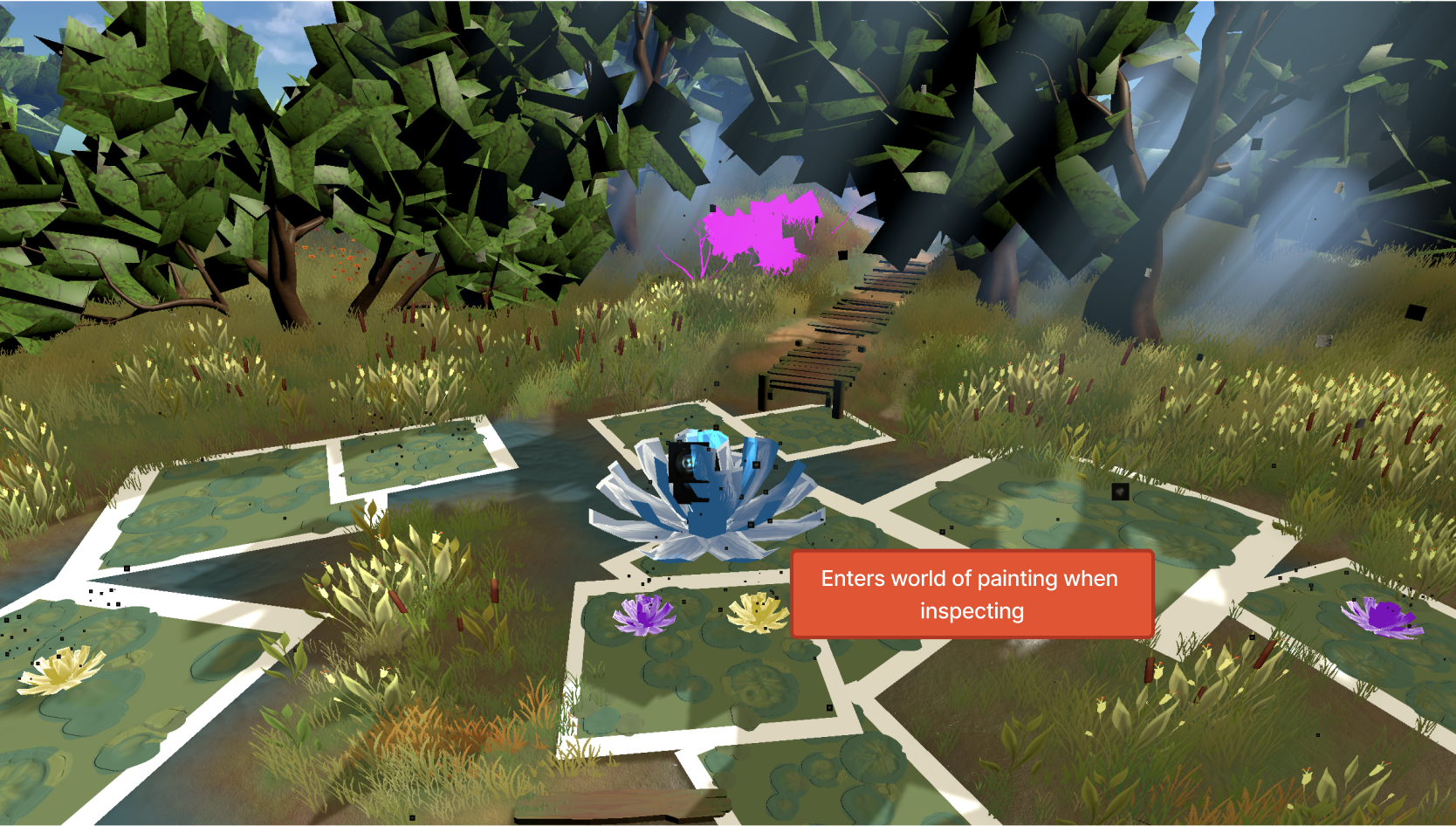
The proof of concept focused on the functionality of entering a painting (Monet's Lily Garden) and exploring it as a new world. Designing this game focused on finding a balance between education and fun.
User Testing
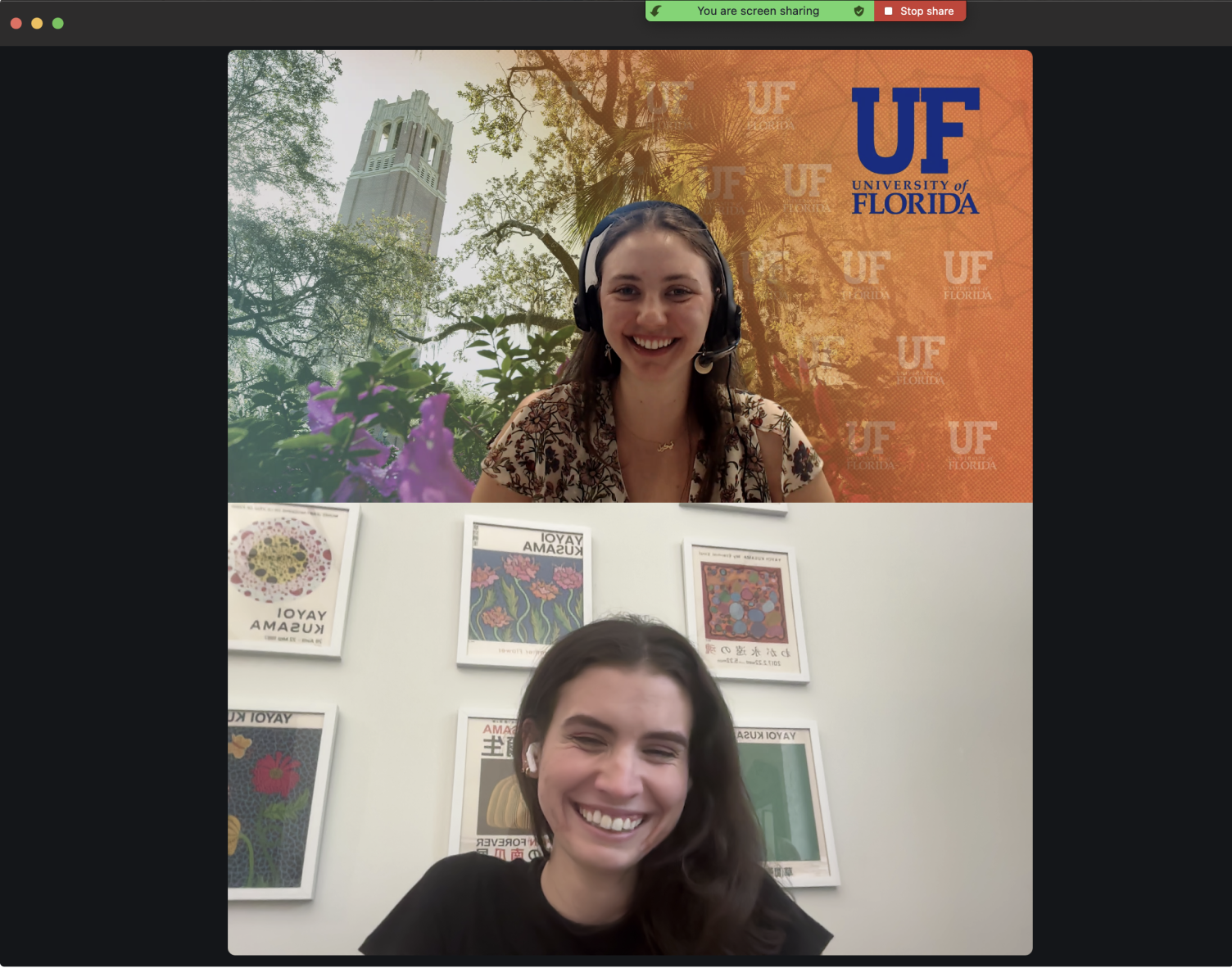
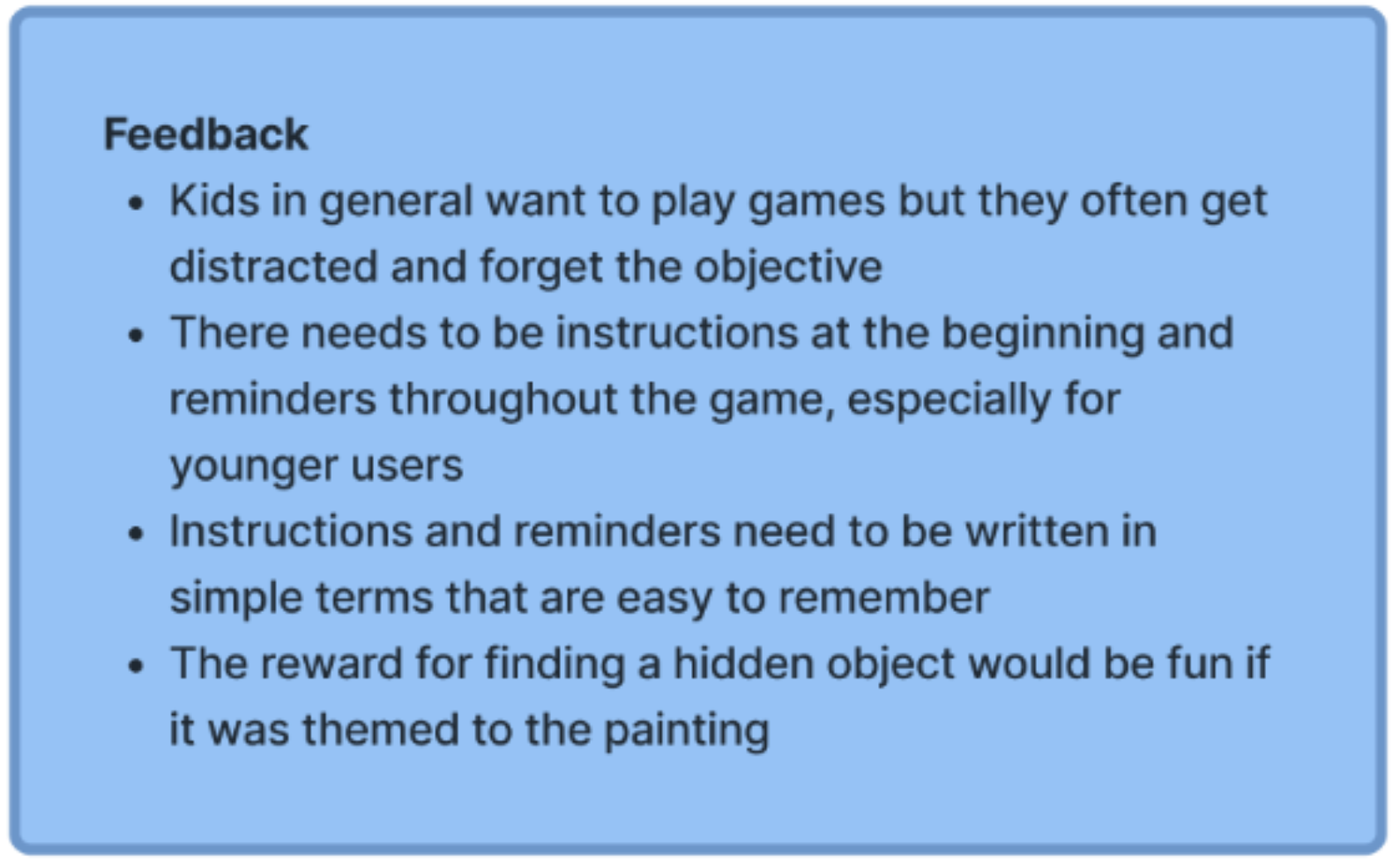
With the proof of concept made for my project, I wanted to get feedback from someone familiar with young children’s behaviors to make sure this experience was going to be engaging for them. I user tested with someone who works in early childhood education at the University of Florida, by walking them through the proof of concept flow and asked them to help discern what would and would not work for an educational game.
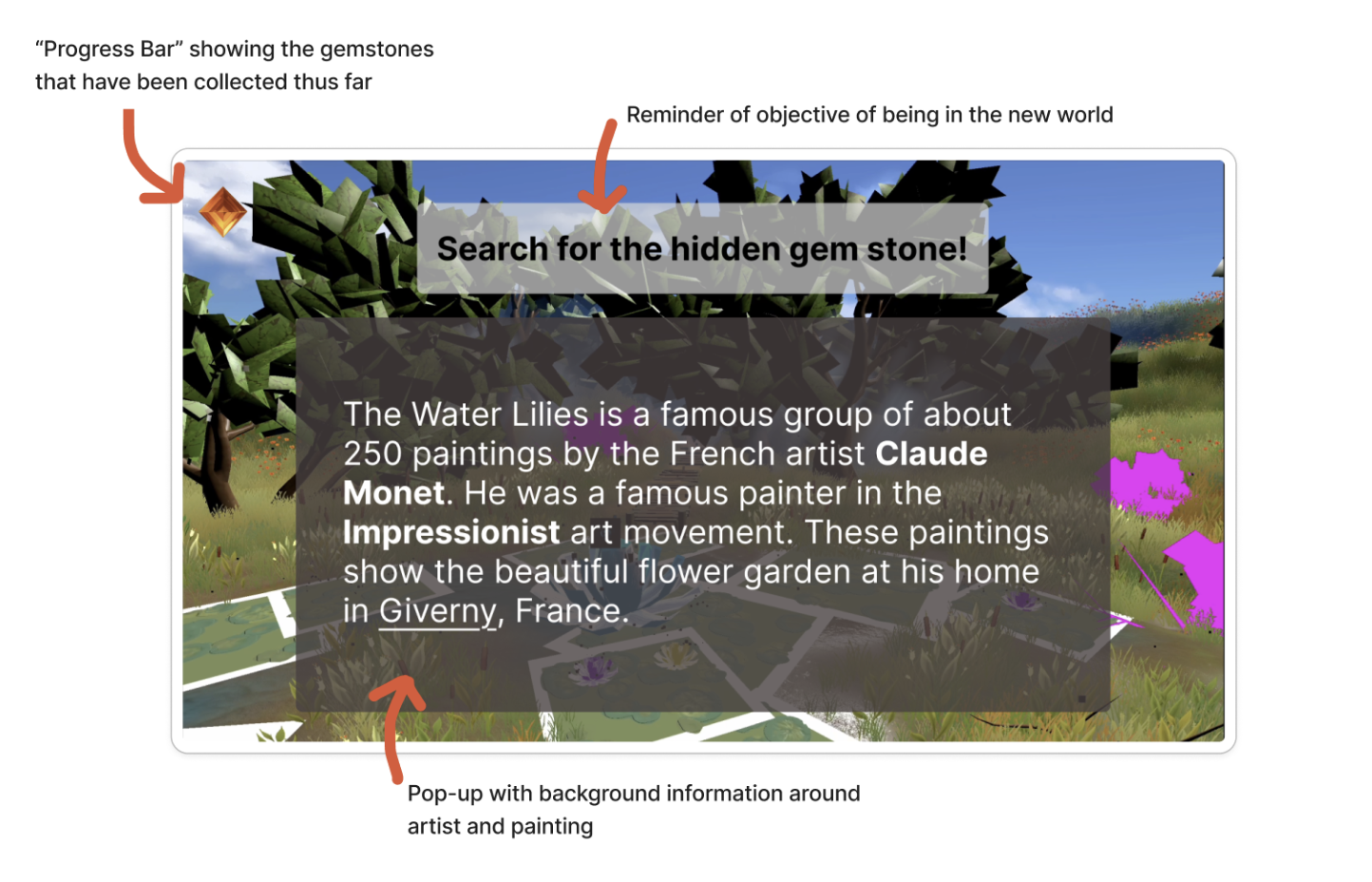
In testing, she pointed out how easily distracted kids get and also emphasized the need for clear instructions. Based on her feedback, I added visual cues and prompts on scene entry to remind kids of their objective.
It was particularly valuable to get direct feedback from someone who has first hand experience in how kids engage with learning material. Based on the feedback I received from this session, I redesigned parts of the application to help make the experience better fit for kids.
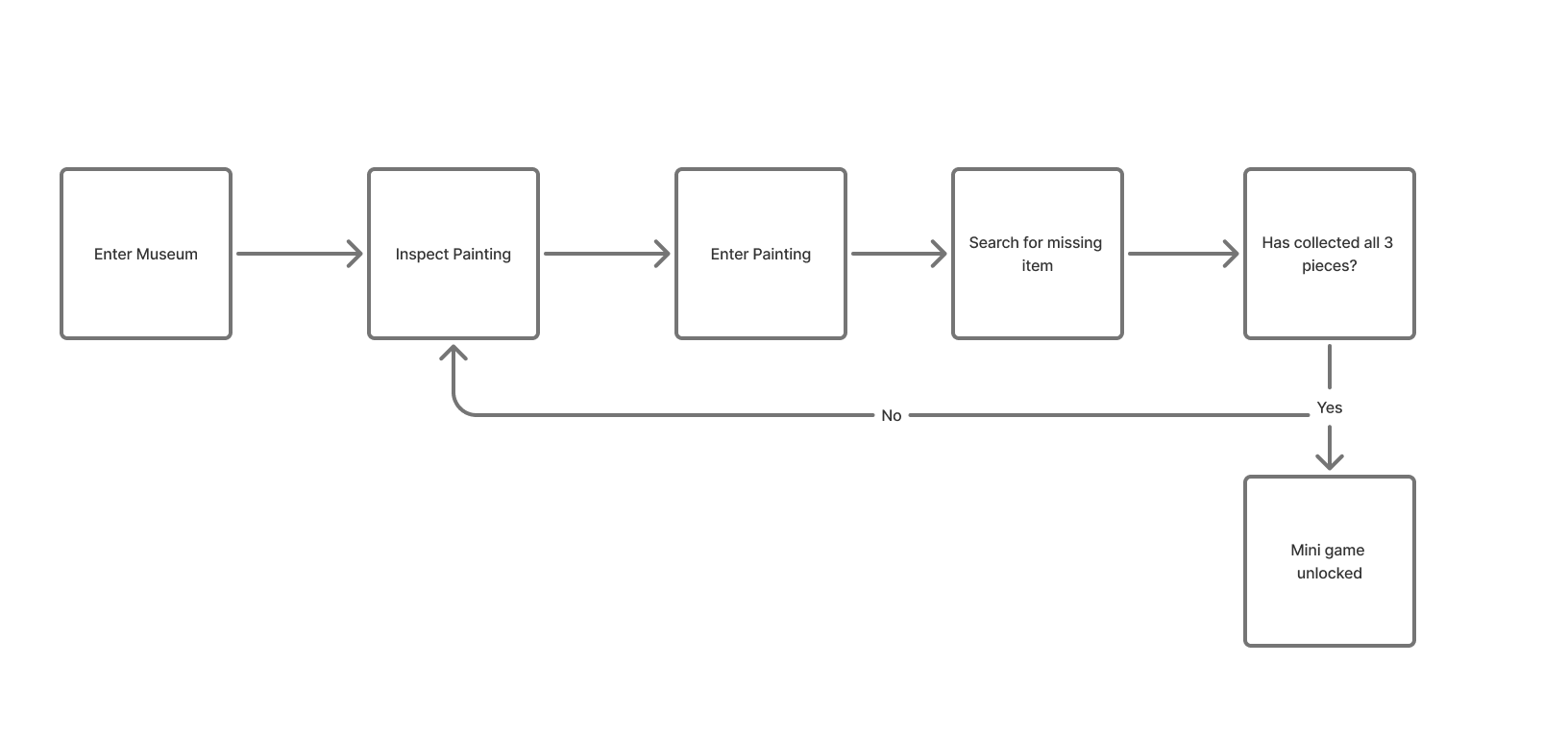
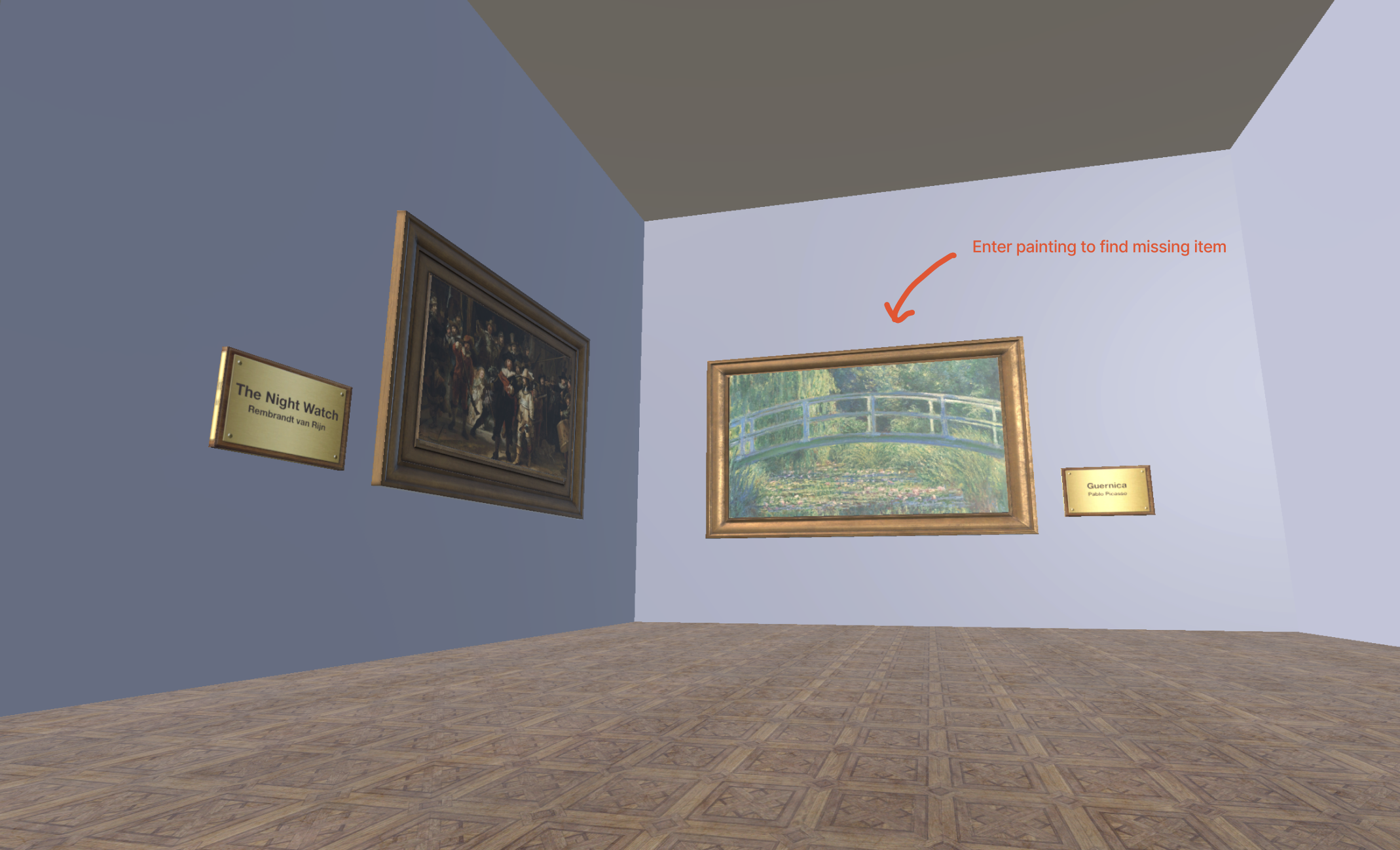
The user enters the museum and is shown multiple paintings hanging on the wall. In this game, the user then approaches the paintings one by one and inspects them. Upon inspecting they ‘enter’ the painting and are transported into the paintings world. In the world they need to search for a missing item, which they are given a hint about. Once collected they can return to the museum to enter a different painting. If they have inspected all paintings and collected all of the missing items, when they return to the main gallery they will find a mini-game unlocked in the form of an interactive easel.
Final Experience
Unlocked Mini Game
Conclusion
I felt inspired to create an art education program for kids because it was something I was exposed to very young and, because of that, I have grown up to appreciate and love the arts. I would love to impart a similar love for museums for any kids who interacted with my game. From my first iteration of the game, I made a ton of changes to make the experience more interactive and immersive for the kids, creating alternate worlds that they could step into. I faced challenges along the way in technical forms through the tedium of working in unity with far too many assets. I also faced design struggles in trying to better understand and empathize with young children’s experiences in museums. I found it very rewarding to complete the different milestones of the project. Whether it was making the painting portals work or creating a mini game for the kids, each step felt like an accomplishment. I also found it very rewarding to take a project through multiple iterations. By presenting two prior versions, I gathered helpful feedback at different stages that would then be incorporated into the final iteration, I felt like this allowed me to create a more mature and realized final version that better accomplished the goal of creating an immersive art education experience for kids.