
A chatbot by a knitter for a knitter
This project is a case study for a proposed interactive chat bot for Knitty City. One of the most valuable parts of going to a yarn store in person is being able to ask store employees for guidance on which products are needed for a project. When moving the shopping experience to online, their expertise is lost to the customer making it significantly more difficult to navigate the store’s product offerings.
By Sofia Harmon
What is Knitty City?
Introduction
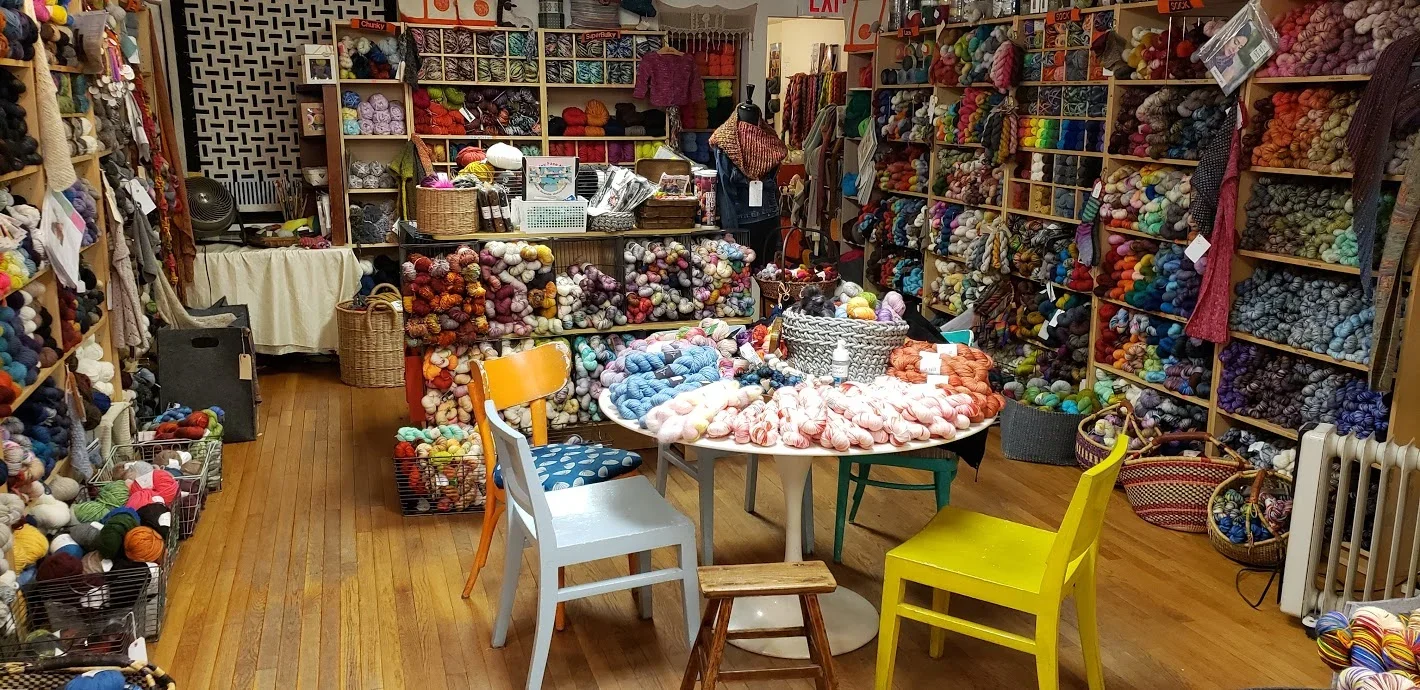
Knitty City is a local yarn store in the Upper West Side of Manhattan that specializes in knitting and crocheting supplies. The store offers a variety of yarns of different textures, materials, weights, and durability each with their own specific uses and
Customers often go into a yarn store with an idea of a project but are not sure of what materials they need
Is Conversation the Right Fit?
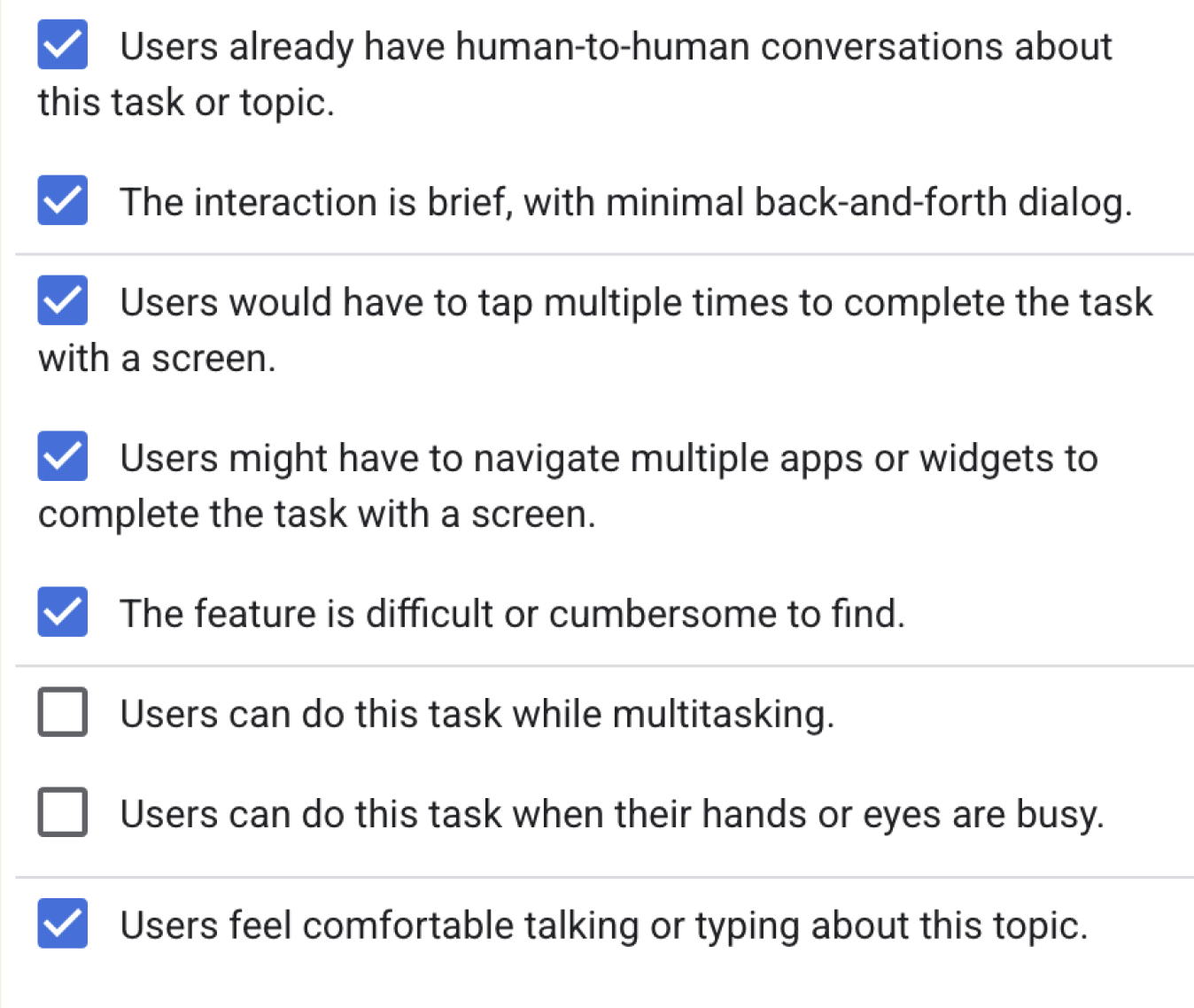
Seeking suggestions is already a common human-to-human task
Shoppers would normally have these conversations with someone in the store.
Users will save time and effort by minimizing the need to navigate through multiple pages.
There is no personal information being exchanged, removing any concern for having this conversation in public.
Designing the Bot
Intention
Functions as an assistant for shoppers to help determine what they need for their knitting project.
Made to suggest type and brand of yarn needed based on the user’s project requirements.
Designed for text-based chatting on the user’s phone or computer via the store’s website.
Interacts with store’s inventory to update the user’s cart with materials they want to purchase.
Main Features
Power Dynamics
The bot’s power in this relationship comes from it’s knowledge of the store’s merchandise and on the subject of knitting materials.
The user’s power is derived from the customer service dynamic where the customer’s satisfaction is the main goal of the interaction.
This relationship should be intimate in the way that the user should have trust in the bot’s knowledge and expertise.
The relationship between user and bot is not designed to evolve over time but instead the is meant to remain a trustworthy channel for the user to return to when needing recommendations.
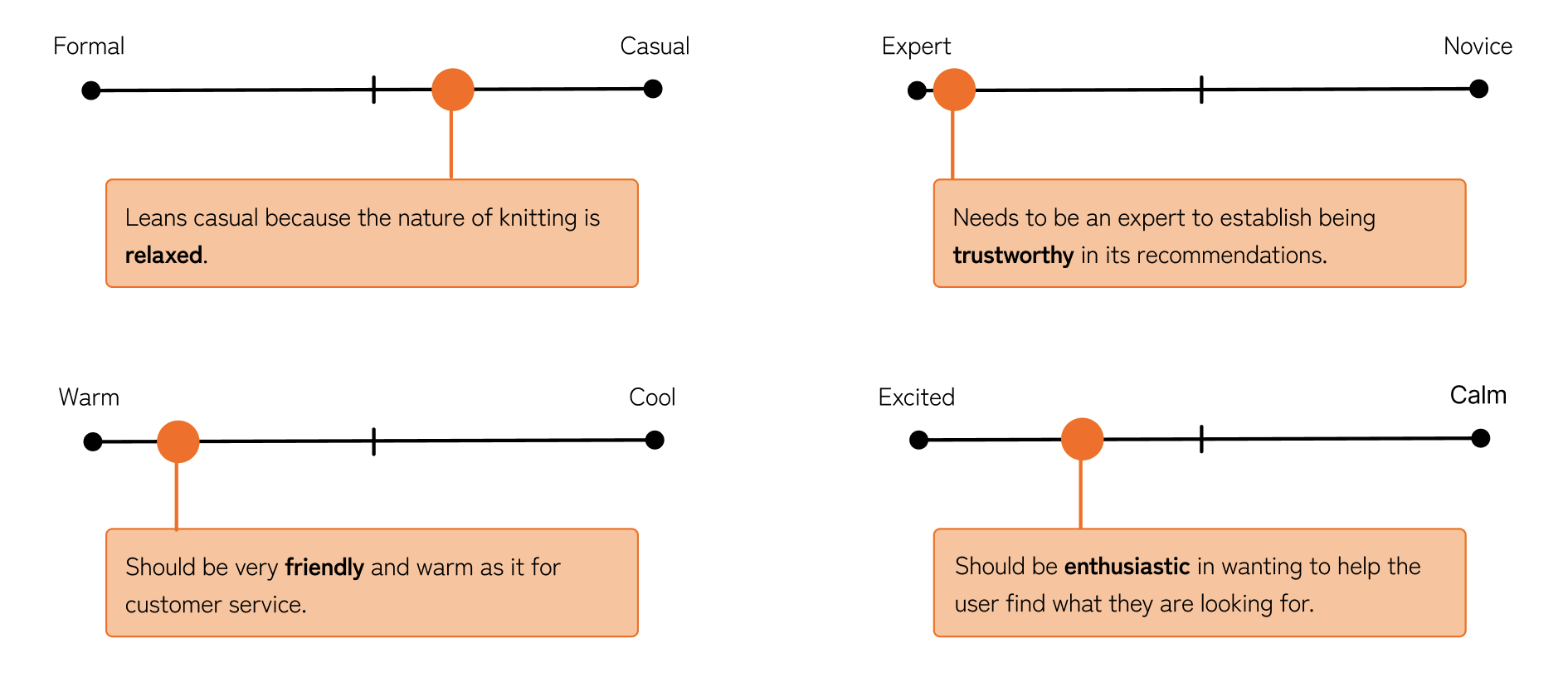
Creating the Bot’s Personality
Defining Workflows
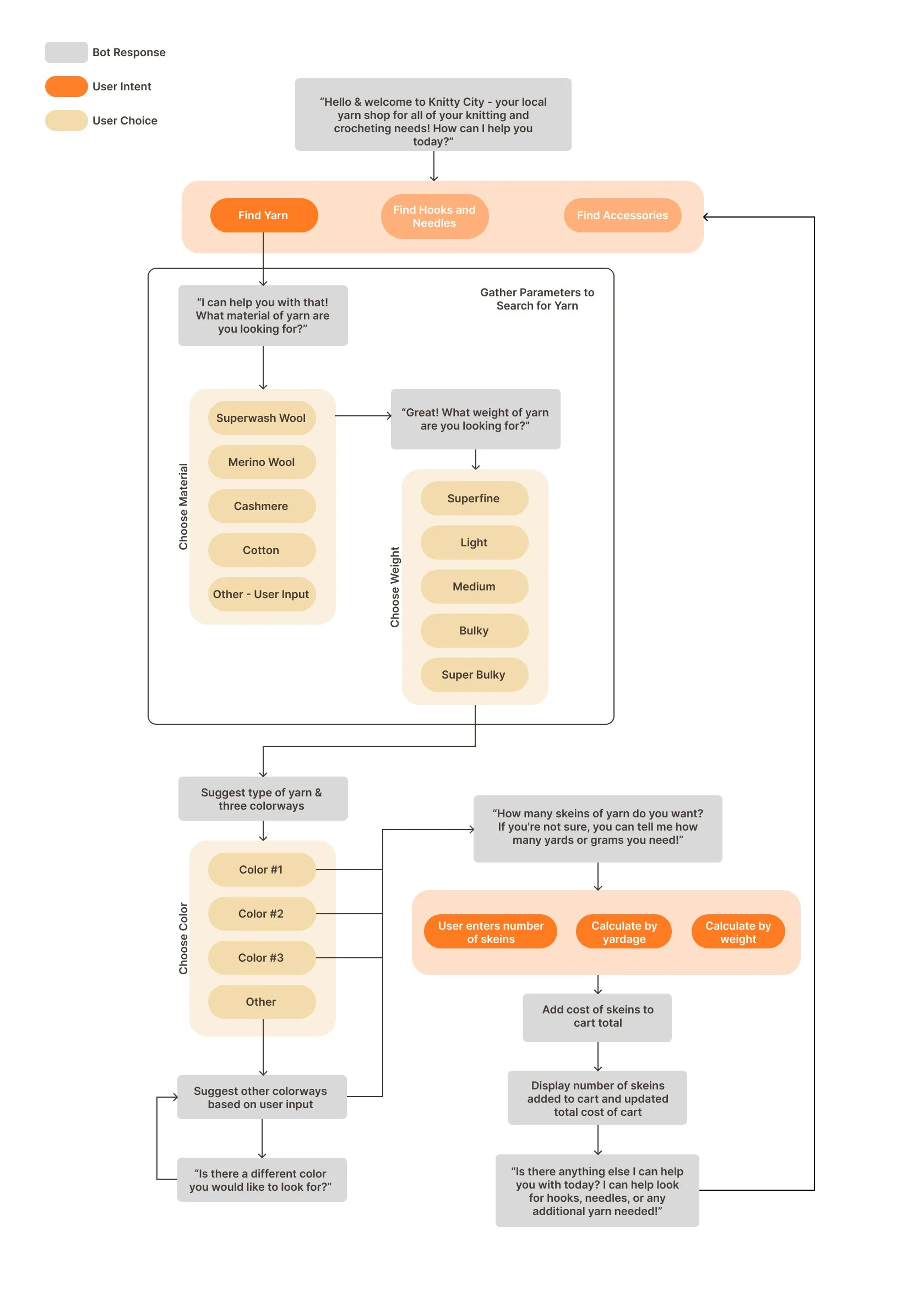
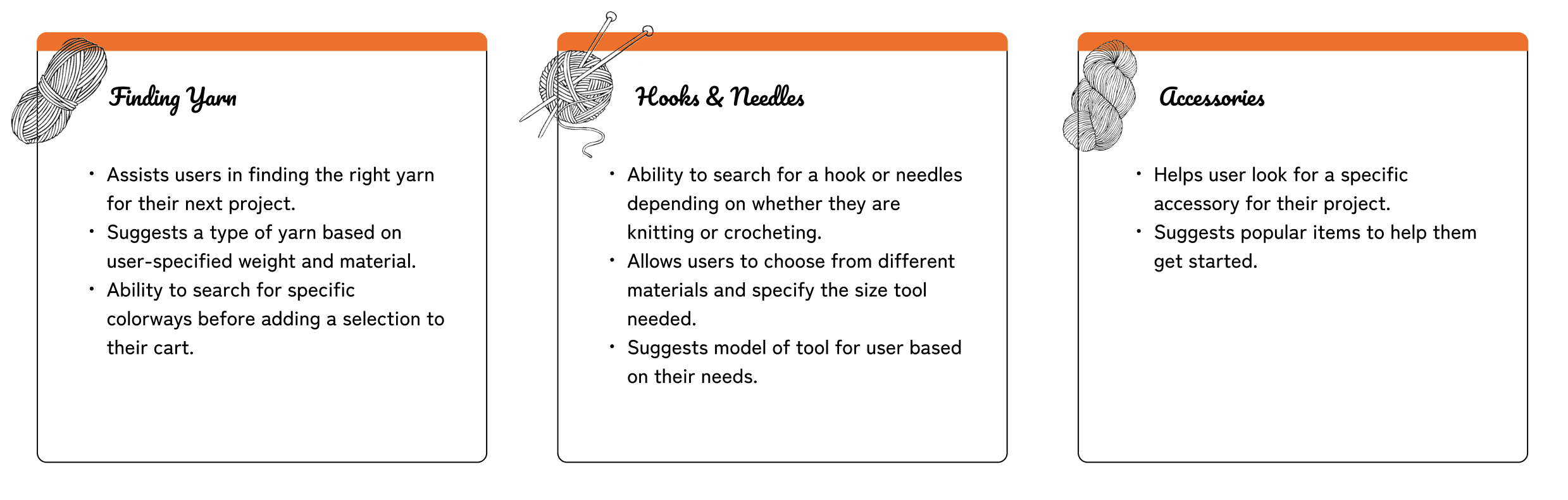
Finding Yarn
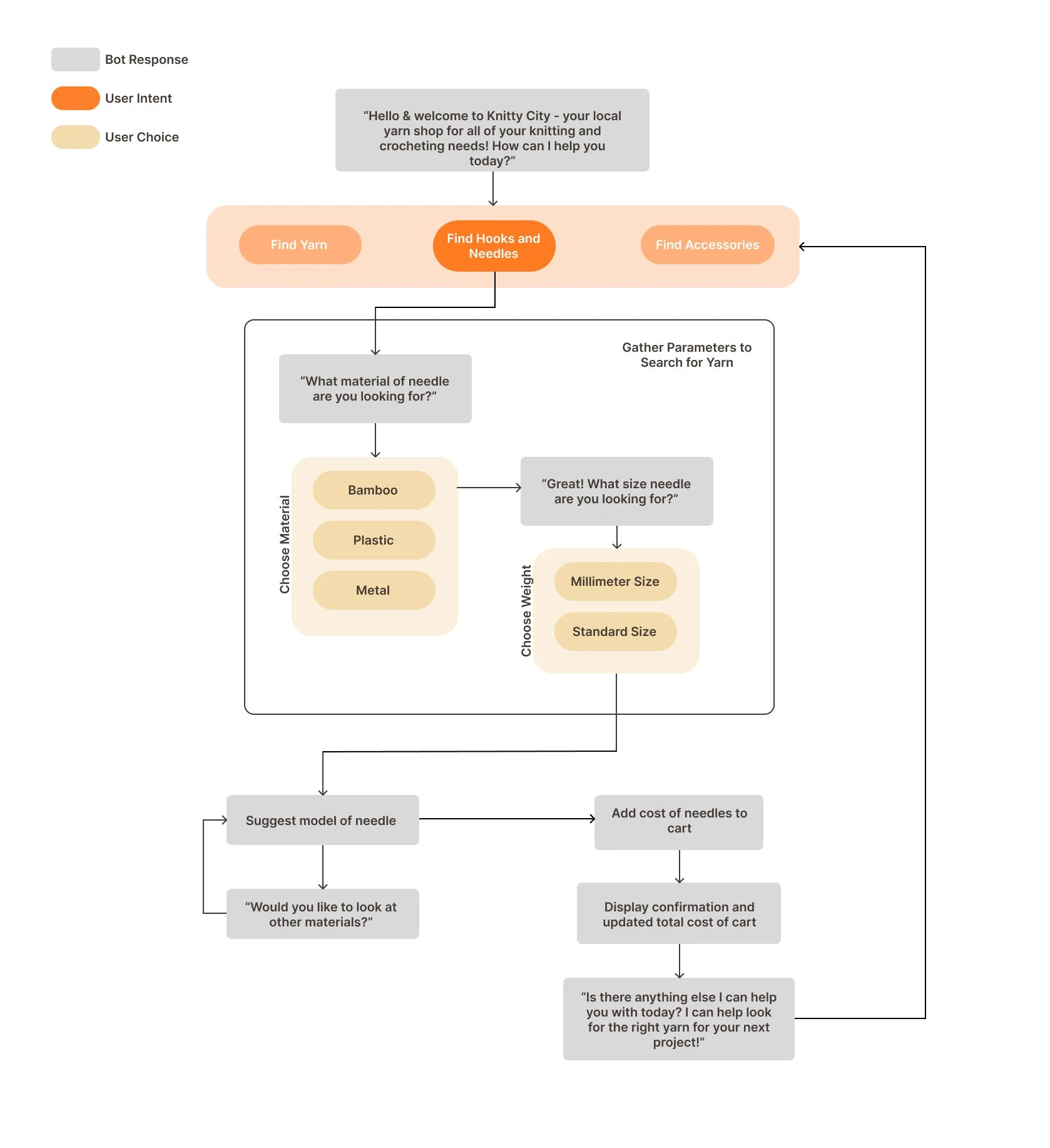
Finding Hooks & Needles
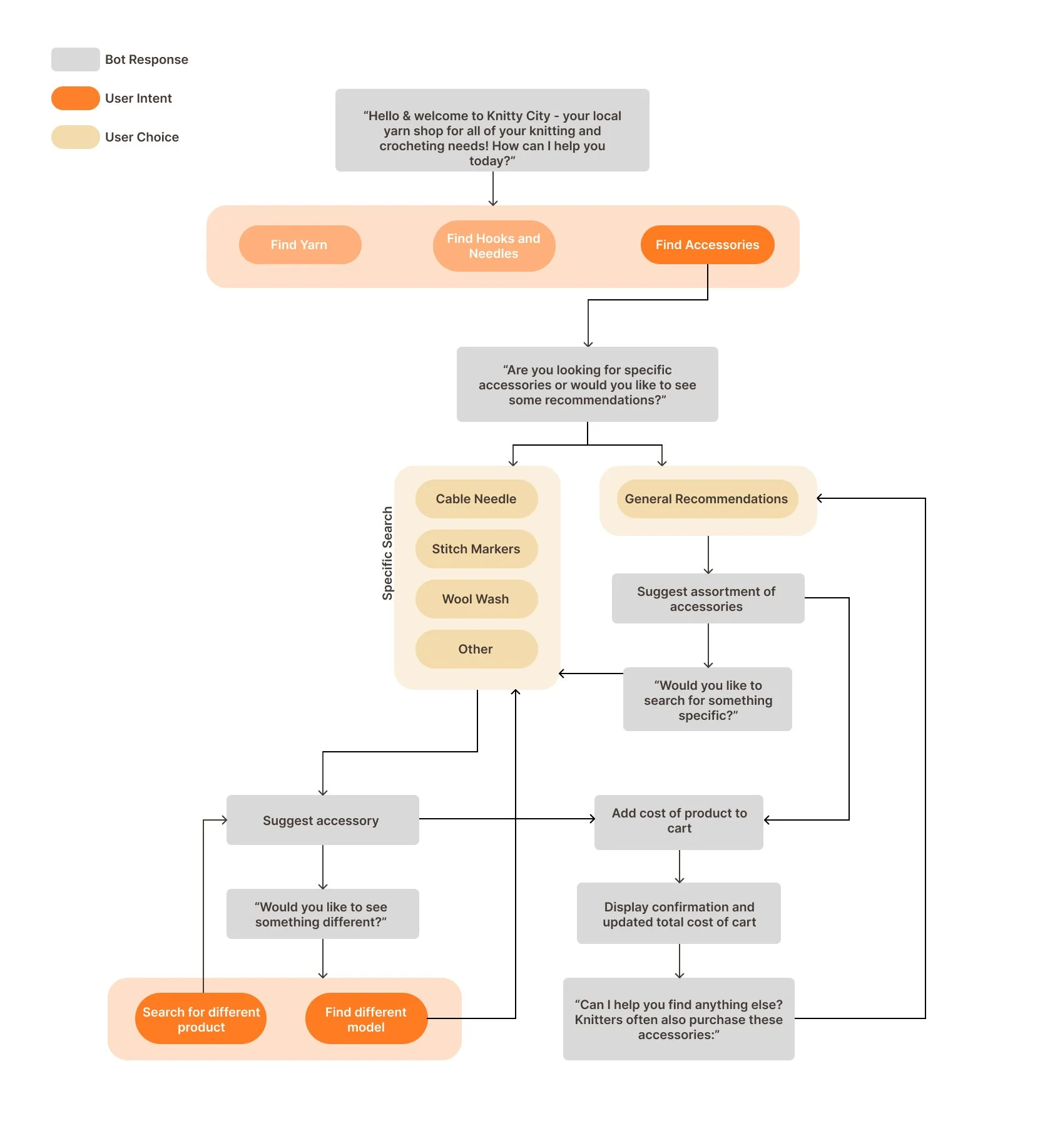
Finding Accessories
Prototyping
Once decisions on how the bot would behave and the scope of it’s possible workflows were made, the next step was to create prototypes showcases these workflows.
Finding Yarn
The first workflow of finding yarn shows how a user can prompt the bot to help search for specific attributes in the yarn that they are looking for. For questions like yarn material, the user is given suggested responses like ‘Superwash Wool’ or ‘Merino Wool’ to help streamline the search process.
Once the bot is able to suggest yarns for the user, it then displays the product options as individual cards with display photos to help orient the user.
Finding Accessories
The second workflow is around looking for knitting or crochet accessories. The user can search for an accessory they need and, if available, will have a product card shown to them with the ability to add the item to their cart.
Once added to the cart, the bot will then ask the user if they need help with anything else and will show the user a few recommended accessories as well. This helps facilitate discoverability of products they might need similar to the in person experience of speaking with the store employees.
Finding Hooks & Needles
Lastly, the bot has the ability to help the user search for hooks and needles according to certain specifications like size and material. The bot is able to distinguish between the needs for a project depending on whether the user is knitting or crocheting, taking the mental load off of the user.